Mesothelioma Basics: What Everyone Should Know About This Serious Disease
Understanding the Risks, Recognizing the Warning Signs, and Knowing When to Seek Help
Some diseases develop quickly, while others remain hidden for decades before revealing their presence. Mesothelioma belongs to the second category. This rare and aggressive form of cancer can take many years to develop, making awareness, knowledge, and timely medical evaluation especially important.
Although mesothelioma is not widely discussed, understanding its causes, symptoms, risk factors, and diagnosis can help people make more informed decisions about their health. For individuals who may have encountered asbestos in the workplace or elsewhere, knowing the basics could be particularly valuable.
The first step toward protecting your health is understanding what you may be facing.
What Is Mesothelioma?
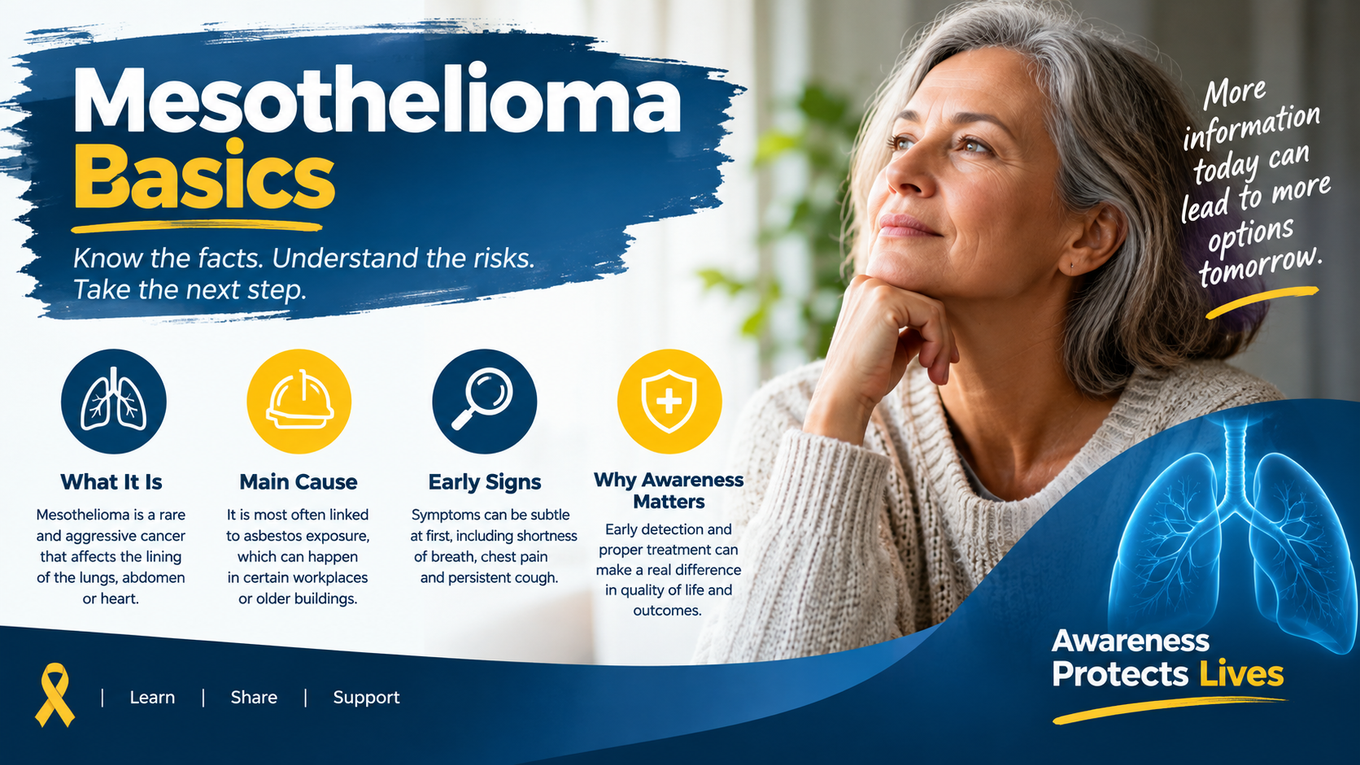
Mesothelioma is a type of cancer that develops in the mesothelium, a thin layer of tissue that surrounds and protects certain internal organs. This protective lining allows organs to move smoothly while reducing friction inside the body.
The disease most commonly affects the pleura, the tissue surrounding the lungs. This form is called pleural mesothelioma. Other forms include peritoneal mesothelioma, which affects the lining of the abdomen, and much rarer forms involving the lining around the heart or the tissue surrounding a testicle.
Pleural mesothelioma can interfere with normal breathing when tumors or fluid accumulation affect the tissues around the lungs. Abdominal mesothelioma may cause swelling, discomfort, and digestive symptoms.
One of the greatest challenges associated with this disease is that early symptoms may be subtle or resemble those of more common conditions. People may attribute fatigue, coughing, chest discomfort, or abdominal changes to less serious causes.
Understanding these possibilities does not mean assuming the worst. It means recognizing when persistent symptoms deserve professional attention.
What Causes Mesothelioma?
The strongest established risk factor for mesothelioma is exposure to asbestos, a naturally occurring group of minerals historically used in construction, insulation, shipbuilding, manufacturing, and industrial equipment.
Asbestos became widely used because it resists heat, provides insulation, and withstands many forms of physical wear. However, when asbestos-containing materials are damaged, cut, drilled, or disturbed, microscopic fibers may become airborne.
When these fibers are inhaled, they can become trapped in tissues around the lungs and cause prolonged inflammation and cellular damage. Over time, these changes may contribute to the development of cancer.
Mesothelioma often has a long latency period. Symptoms may not appear until 20 to 50 years after exposure, meaning that a person diagnosed today may have encountered asbestos many decades earlier.
Occupations historically associated with asbestos exposure include construction, demolition, shipbuilding, insulation work, industrial maintenance, and certain manufacturing activities. Exposure may also occur indirectly when fibers are carried home on contaminated clothing or equipment.
Not everyone exposed to asbestos develops mesothelioma, and individual risk depends on several factors. Nevertheless, a history of exposure is important information to share with a healthcare professional.
Smoking is not considered a direct cause of mesothelioma. However, smoking increases the risk of lung cancer and other serious respiratory diseases, particularly among people with asbestos exposure.
Recognizing the Signs and Symptoms
Mesothelioma symptoms can vary depending on the location of the cancer and how far the disease has progressed. In some cases, symptoms develop gradually, making them difficult to recognize at first.
Pleural mesothelioma may cause persistent chest pain, shortness of breath, a continuing cough, unusual fatigue, unexplained weight loss, or difficulty taking deep breaths. Some people develop pleural effusion, a buildup of fluid around the lungs that can make breathing uncomfortable.
Peritoneal mesothelioma may produce abdominal pain, swelling, nausea, reduced appetite, changes in bowel habits, or unexplained weight loss. Fluid may also accumulate inside the abdomen.
These symptoms are not exclusive to mesothelioma. Many other conditions can cause similar problems, including infections, inflammatory diseases, and more common respiratory disorders.
However, symptoms that persist, worsen, or occur alongside a history of asbestos exposure should not be ignored. A medical professional can evaluate the situation and determine whether further testing is appropriate.
Pay attention to changes in your body. Seeking medical advice does not mean you have cancer; it means you are taking your health seriously.
How Is Mesothelioma Diagnosed?
Diagnosing mesothelioma requires a careful medical investigation. Because its symptoms can resemble those of other illnesses, doctors use several methods to establish an accurate diagnosis.
The process usually begins with a medical history and physical examination. A healthcare professional may ask about symptoms, previous medical conditions, occupational history, and possible asbestos exposure.
Imaging tests, such as chest X-rays and computed tomography scans, can help identify abnormalities around the lungs or abdomen. Depending on the situation, doctors may recommend additional imaging to examine suspicious areas more closely.
However, imaging alone generally cannot confirm mesothelioma.
A biopsy is usually required to establish the diagnosis. During this procedure, a sample of tissue is collected and examined by a pathologist. Specialized laboratory tests may help determine whether the cells are consistent with mesothelioma and distinguish it from other cancers.
If the diagnosis is confirmed, additional tests may be recommended to establish the extent of the disease and guide treatment planning.
Although the diagnostic process can feel overwhelming, obtaining accurate information is essential. A confirmed diagnosis allows the medical team to discuss the available options and develop a plan suited to the individual’s circumstances.
Treatment and Living With Mesothelioma
Treatment depends on several factors, including the type of mesothelioma, the stage of the disease, the patient’s overall health, and personal preferences.
Depending on the circumstances, treatment may include surgery, chemotherapy, immunotherapy, radiation therapy, or a combination of approaches. Some patients may also qualify for targeted treatments or clinical trials.
Supportive and palliative care can help manage pain, breathing difficulties, fatigue, and other symptoms. This type of care can be provided alongside cancer treatment and focuses on improving comfort and quality of life.
Because mesothelioma is a complex disease, consulting a specialist experienced in treating it may help patients understand their options. Patients and families can ask questions, seek a second opinion, and discuss the potential benefits and limitations of recommended treatments.
A diagnosis can bring fear and uncertainty, but patients do not have to navigate every decision alone. Medical teams, family members, counselors, and patient support organizations may provide valuable assistance throughout the process.
Prevention and Awareness: Why Knowledge Matters
Since asbestos exposure is the major established risk factor for mesothelioma, reducing exposure is an important preventive measure.
People should avoid disturbing materials that may contain asbestos, particularly in older buildings or industrial settings. If asbestos is suspected, qualified professionals can assess the material and arrange appropriate handling or removal when necessary.
Workers in industries where asbestos may be present should follow applicable safety regulations and use appropriate protective measures.
Anyone with a history of potential exposure should discuss it with a healthcare professional, who can provide advice based on individual circumstances. There is no universally recommended screening test proven to reduce mesothelioma deaths in asymptomatic people, so monitoring and testing decisions should be individualized.
Awareness also helps families understand why exposure history matters and why certain symptoms deserve attention.
Final Thoughts: Make Knowledge Your First Step
Mesothelioma is a serious disease, but understanding its basic characteristics can help people recognize potential risks, identify concerning symptoms, and seek appropriate medical advice.
Its long development period makes awareness especially important. Exposure may have occurred decades ago, and symptoms may initially appear unrelated to the underlying condition.
If you have experienced possible asbestos exposure or are concerned about persistent symptoms, speak with a qualified healthcare professional. Do not attempt to diagnose yourself or rely on online information as a substitute for medical evaluation.
Your health deserves attention before uncertainty becomes fear. Learn the facts, understand the risks, and take informed steps toward protecting yourself and those around you.
Medical disclaimer: This article is for educational purposes only and does not replace professional medical advice, diagnosis, or treatment.