Mesothelioma Symptoms and Causes: Recognizing the Hidden Risks of Asbestos
When the Past Reveals a Serious Health Risk
Imagine discovering that a material you encountered decades ago could be connected to a serious illness today. For many people affected by mesothelioma, this possibility becomes a life-changing concern.
Consider the fictional experience of Daniel, a former construction supervisor who spent years working on renovation projects. During his career, he entered older buildings, inspected insulation, and worked alongside contractors handling industrial materials. Workplace safety practices were different in some of the environments where he worked, and he rarely considered how those conditions might affect his health in the distant future.
Years after retirement, Daniel began noticing persistent fatigue and difficulty breathing during ordinary activities. Initially, he blamed his symptoms on aging. However, when his breathing problems continued and discomfort developed in his chest, he decided to seek medical advice.
Further investigation revealed a diagnosis of malignant mesothelioma, a rare cancer strongly associated with asbestos exposure.
Although Daniel’s story is fictional, the situation reflects an important medical reality: mesothelioma may develop many years after exposure, making awareness of its symptoms and causes especially important.
What Is Mesothelioma and Why Does It Develop?
Mesothelioma is a cancer that forms in the mesothelium, a thin layer of tissue surrounding or lining certain organs. The disease most frequently affects the pleura, the membrane surrounding the lungs. This condition is known as pleural mesothelioma.
Another form, called peritoneal mesothelioma, develops in the lining of the abdominal cavity. Much rarer forms affect the tissue surrounding the heart or the testes.
The disease can be difficult to recognize because its initial symptoms may resemble common respiratory or digestive problems. Furthermore, symptoms may not appear until decades after the original asbestos exposure.
Understanding this long delay is essential. A person who feels healthy today may still have questions about materials encountered during previous employment or home renovations.
However, a history of asbestos exposure does not mean that someone will inevitably develop mesothelioma. Individual risk varies, and persistent symptoms can have many possible explanations.
Asbestos Exposure: The Primary Established Cause
To understand mesothelioma, it is necessary to understand asbestos.
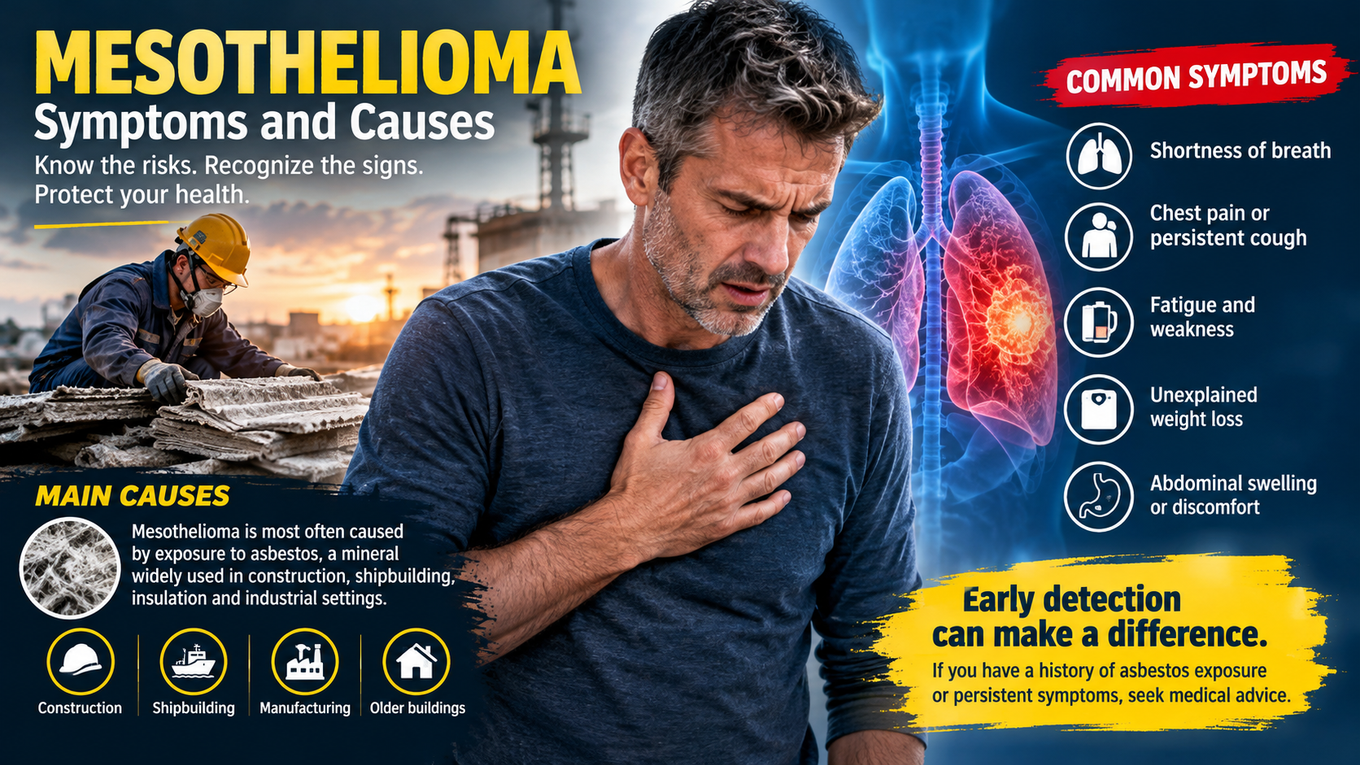
Asbestos refers to a group of naturally occurring minerals historically used in building materials, insulation, automotive components, shipbuilding, and industrial equipment. Manufacturers valued these minerals because of their heat resistance, durability, and insulating properties.
The danger arises when asbestos-containing materials release microscopic fibers into the air. People may inhale these fibers or swallow them after exposure.
Once inside the body, asbestos fibers can persist for long periods and contribute to inflammation, tissue damage, and processes that may eventually lead to cancer.
Occupational exposure has historically affected people working in construction, shipyards, manufacturing, insulation installation, maintenance, and demolition. Exposure may also occur in other settings where asbestos-containing materials are disturbed.
In some circumstances, workers have carried asbestos dust home on their clothing, potentially exposing household members.
Daniel had spent years inspecting older buildings without realizing that some materials could contain asbestos. Learning about this possibility helped him understand why his doctors wanted a detailed account of his employment history.
It is important to remember that asbestos exposure is the principal established cause of malignant mesothelioma, but not every exposed person develops the disease. Smoking is not considered a direct cause of mesothelioma, although it increases the risk of other asbestos-related diseases, including lung cancer.
Mesothelioma Symptoms: Signs That Deserve Attention
Recognizing possible symptoms is an important reason to learn about this disease. There is no single symptom that confirms mesothelioma, and symptoms alone cannot establish a diagnosis. Nevertheless, persistent or unexplained changes in health should be evaluated by a medical professional.
1. Persistent Breathing Difficulties
Pleural mesothelioma can cause shortness of breath, particularly when fluid accumulates around the lungs. Activities that were once comfortable, such as walking uphill or climbing stairs, may become increasingly difficult.
Breathing problems have many potential causes, including heart and lung conditions. However, people with a history of asbestos exposure should inform their healthcare professionals about that history.
2. Chest Pain or Persistent Cough
Some individuals experience chest discomfort, pressure, or a cough that does not resolve. These symptoms may develop gradually and can easily be mistaken for a respiratory infection or another common condition.
If chest pain or coughing persists, medical evaluation can help determine the underlying cause.
3. Unexplained Weight Loss and Fatigue
Unintentional weight loss, reduced appetite, and ongoing fatigue may occur in people with mesothelioma. These symptoms are not specific to cancer, but they should not be overlooked when they continue without an obvious explanation.
4. Abdominal Swelling or Discomfort
Peritoneal mesothelioma can produce abdominal pain, swelling, nausea, changes in bowel habits, and a sensation of fullness. Fluid accumulation in the abdomen may also occur.
Because these signs can result from numerous medical conditions, a proper assessment is necessary to identify the cause.
How Doctors Diagnose Mesothelioma
Diagnosing mesothelioma generally involves several steps. A healthcare professional may review symptoms, previous occupations, possible asbestos exposure, and personal medical history before recommending additional tests.
Imaging examinations, including chest X-rays or computed tomography scans, can help identify abnormalities. Depending on the findings, doctors may recommend further imaging or other investigations.
A biopsy, which involves collecting tissue for laboratory examination, is generally necessary to confirm malignant mesothelioma. Specialists may also perform additional tests to determine the specific type and extent of the disease.
Receiving a diagnosis can be overwhelming for patients and their families. Asking questions, requesting explanations in understandable language, and discussing treatment options with experienced medical professionals can help patients participate in decisions about their care.
Treatment Options and the Importance of Individualized Care
Mesothelioma treatment depends on several factors, including the cancer’s location, stage, cell type, and the patient’s general health.
Depending on the circumstances, treatment may include surgery, chemotherapy, immunotherapy, radiation therapy, or combinations of these approaches. Supportive and palliative care can also help manage symptoms and improve quality of life.
Not every treatment is appropriate for every patient, and outcomes vary considerably. A specialist can explain the potential benefits, risks, and limitations of available options.
Patients may also wish to ask whether clinical trials are suitable for their situation.
Although mesothelioma remains a serious disease, access to reliable medical information can help individuals understand their choices and prepare for conversations with their healthcare team.
Reducing Exposure and Protecting Future Generations
Preventing avoidable asbestos exposure remains an important public health priority.
People who suspect that an older building contains asbestos should not cut, drill, sand, or remove potentially contaminated materials themselves. Disturbing these materials can release hazardous fibers into the air.
Instead, qualified professionals should assess the situation and follow applicable safety regulations.
Workers in industries where asbestos may be present should follow established workplace safety procedures and use appropriate protective measures. Anyone concerned about past exposure should discuss it with a healthcare professional.
There is no established screening test that is routinely recommended for every asymptomatic person with a history of asbestos exposure. Medical advice should be tailored to the individual’s circumstances.
Knowledge Can Help You Take the Next Step
Mesothelioma illustrates how an exposure that occurred long ago can become relevant to a person’s health many years later. Its connection to asbestos, its potentially subtle symptoms, and its long latency period make awareness especially valuable.
If you experience persistent breathing difficulties, unexplained chest discomfort, or continuing abdominal swelling, seek medical advice rather than assuming the symptoms will disappear. If you have worked with asbestos, share that information during your appointment.
Sudden or severe breathing difficulties and intense chest pain require urgent medical attention.
The most important message is not to live in fear, but to make informed decisions. Understanding mesothelioma symptoms and causes can encourage meaningful conversations with healthcare professionals, support safer workplaces, and help families recognize when medical evaluation may be necessary.
Knowledge cannot replace professional diagnosis or treatment, but it can help you recognize concerns, ask better questions, and take responsible steps toward protecting your health.